



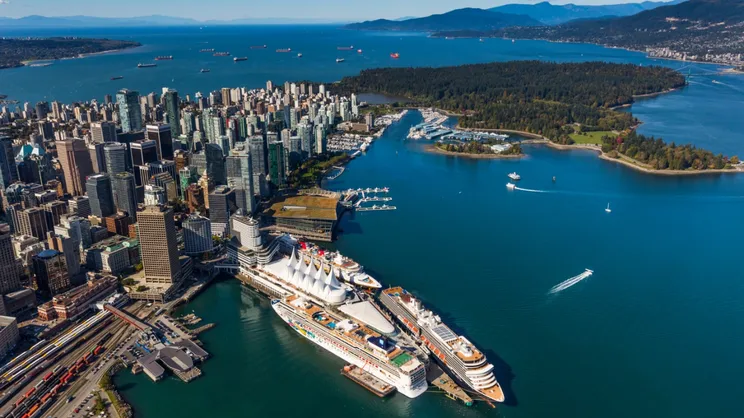
Sustainability Efforts Support Growth in Alaska Cruise Tourism
Alaska cruises are renowned for offering travelers unparalleled access to some of the world’s most spectacular natural landscapes. As cruise traffic to Alaska continues to grow, the Port of Vancouver is taking significant steps to minimize environmental impacts while supporting the sustainable development of the industry.
“We take our responsibility to our cruise line partners and their guests very seriously. They have chosen Vancouver as part of their Alaska cruise experience, and we will continue working to ensure that experience remains memorable,” said Jane Banham, Director of Trade Development at the Vancouver Fraser Port Authority.
The Port of Vancouver is expecting a record-breaking cruise season, with approximately 360 cruise calls and 1.4 million passengers projected in 2025. As volumes continue to increase, collaboration between cruise lines, governments, and destination management partners has become more important than ever.
Key Environmental Priorities
To ensure that cruise growth aligns with sustainability objectives, the Port of Vancouver has implemented several initiatives aimed at protecting the natural environments of British Columbia and Alaska.
Shore Power and LNG Bunkering
One of the port’s most significant sustainability initiatives is its shore power program, which allows cruise ships to connect to British Columbia’s low-emission hydroelectric grid while docked, significantly reducing emissions generated by onboard engines.
Launched in 2009, Vancouver became the first port in Canada and the third globally to offer shore power for cruise ships. Since its implementation, the program has helped prevent more than 50,000 tonnes of greenhouse gas emissions.
In addition, LNG bunkering operations began in 2025, marking an important step toward the adoption of alternative marine fuels. Approved provider Seaspan Energy successfully completed six LNG bunkering operations for cruise vessels during its inaugural year.
Protecting Marine Wildlife
The Port of Vancouver also supports marine conservation through its ECHO Program, which coordinates voluntary vessel slowdowns in areas where whale populations are at risk.
By reducing vessel speeds, ships decrease underwater noise levels that can interfere with whales’ ability to communicate, navigate, and feed, while also lowering the risk of vessel strikes.
Cruise lines have consistently demonstrated strong participation, achieving nearly 90% compliance during the 2025 season.
Recognizing Industry Leadership
Environmental achievements are further encouraged through programs such as the Blue Circle Awards and EcoAction.
The Blue Circle Awards recognize cruise lines that demonstrate environmental leadership and commitment to sustainability. Meanwhile, EcoAction rewards shipping companies that voluntarily invest in environmental initiatives by offering discounts of up to 75% on port fees.
Advancing the Green Corridor Project
The Port of Vancouver is also a founding partner in the Alaska Green Corridor Project, an initiative exploring the feasibility of operating four cruise ships powered by green methanol between Alaska, British Columbia, and Washington State by 2032.
The project represents a significant step toward reducing emissions and accelerating the transition to cleaner maritime operations.
Expanding Shore Power Infrastructure
Looking ahead, the Port of Vancouver is moving forward with plans to expand shore power infrastructure at Canada Place with support from the Government of Canada.
Currently, approximately 80% of cruise calls in Vancouver are shore-power capable. The planned expansion will allow even more vessels to connect to the electrical grid and shut down their diesel engines while berthed.
These improvements are expected to prevent an additional 3,300 tonnes of greenhouse gas emissions per cruise season—the equivalent of removing approximately 770 gasoline-powered vehicles from the road each year.
A Collaborative Path Forward
“Vancouver has long been a preferred destination for cruise travelers, and collaboration remains essential to ensuring that Canada Place can continue accommodating growing passenger volumes efficiently and sustainably,” Banham explained.
She also recognized the ongoing commitment of cruise line partners to environmental stewardship, noting that their collaboration has been instrumental in positioning Vancouver as one of North America’s leading sustainable cruise ports.
As Alaska cruise tourism continues to expand, the Port of Vancouver’s initiatives demonstrate how innovation, collaboration, and environmental responsibility can work together to support both economic growth and long-term sustainability.